
The phrase “blessings of liberty” means the freedoms, rights and opportunities that come from living in a society where liberty is protected by law. It comes from the Preamble of the United States Constitution, which states that one of the purposes of the Constitution is to “secure the Blessings of Liberty to ourselves and our Posterity.”
In simple terms, the blessings of liberty meaning is the founding fathers’ promise that the rights and freedoms won through the American Revolution would be preserved — not just for their own generation, but for all future generations of Americans. These blessings include freedom of speech, freedom of religion, the right to a fair trial, the right to vote, and the chance to pursue a better life free from tyranny.
If you have ever heard someone ask, “what does secure the blessings of liberty mean?”, this guide to the blessings of liberty meaning walks you through it — its history, its original intent, how it is understood today, and the real-life examples that show it in action.
The Short Answer: What “Blessings of Liberty” Means
At its core, the blessings of liberty meaning refers to all the good things that flow from living in a free country. The word “blessings” here is not necessarily religious, though it carries a spiritual warmth. In the 18th century, a “blessing” simply meant a benefit, a gift, or something good that you enjoy. The “liberty” in the phrase means freedom from unjust rule, the ability to speak, worship, gather and build a life of your own choosing.
So when we talk about the meaning of the blessings of liberty, we are talking about the practical gifts of freedom: the right to criticise the government without fear, the right to practise your faith, the right to own property, the right to choose your leaders, and the right to be treated equally under the law. These are not abstract ideas. They are the everyday freedoms that millions of people around the world still do not have — and that the American founding generation considered precious enough to fight a war for.
The phrase also carries a sense of responsibility. “Securing” the blessings of liberty is an active verb. The founders understood that liberty is not automatic; it must be defended, maintained and handed down. That is why the phrase has resonated for more than two centuries: it is both a celebration of freedom and a reminder that freedom requires work.
Where the Phrase Comes From: The Preamble of the Constitution

The phrase appears in the Preamble of the United States Constitution, the famous opening paragraph that begins with “We the People.” The Preamble was written in 1787 during the Constitutional Convention in Philadelphia, where delegates from the American states gathered to replace the weak Articles of Confederation with a stronger national government.
Instead, it states the purposes of the Constitution: the reasons the document exists and the goals it is meant to achieve.
Understanding the meaning of the preamble is essential to understanding American constitutional thought. The Preamble lists six purposes: to form a more perfect union, establish justice, ensure domestic tranquillity, provide for the common defence, promote the general welfare, and secure the blessings of liberty. Of these, the final purpose — to secure the blessings of liberty to ourselves and our posterity — is the one most often quoted in speeches, court opinions and patriotic ceremonies, because it captures the very soul of the American project.
The Full Text of the Preamble
Here is the complete Preamble of the Constitution, so you can see exactly where the phrase sits:
> “We the People of the United States, in Order to form a more perfect Union, establish Justice, insure domestic Tranquility, provide for the common defence, promote the general Welfare, and secure the Blessings of Liberty to ourselves and our Posterity, do ordain and establish this Constitution for the United States of America.”
Notice that “secure the Blessings of Liberty” is the last of the six purposes, placed there deliberately for emphasis. In the original document, “Blessings” is capitalised — a common 18th-century style choice for important nouns — which tells us the founders considered it a concept of the highest importance. The phrase “to ourselves and our Posterity” extends the promise beyond the founders’ own generation to every generation that would follow.
Historical Context: Why the Founding Fathers Wrote It
To fully grasp what the blessings of liberty meant to the founding fathers, we need to remember what they had just lived through. In 1787, the American Revolution had ended only four years earlier. The founders had watched British soldiers quartered in private homes, had seen colonists taxed without representation, had witnessed newspapers shut down and printers arrested for criticising the Crown, and had suffered under writs that allowed searches without warrants.
Liberty, to them, was not a slogan. It was the opposite of a list of real, lived grievances. When they wrote about securing the blessings of liberty, they were thinking about specific abuses they wanted to prevent forever: no standing armies forced into your home, no taxes imposed without your consent, no government officials who could not be removed, no laws made in a distant capital by people you never elected.
There was also a deeper philosophical influence. Many of the founders had read John Locke, who argued that governments exist to protect the natural rights of life, liberty and property. They believed these rights came from God or from nature itself — not from kings or parliaments — and that no government could legitimately take them away. The Constitution was their attempt to build a government strong enough to protect those rights but limited enough not to threaten them. The “blessings of liberty” were what ordinary citizens would enjoy if that delicate balance held.
What “Blessings of Liberty” Meant in 1787
In 1787, when an American heard the phrase “blessings of liberty,” several concrete freedoms would have come to mind. First and foremost was self-government: the idea that the people themselves, rather than a hereditary monarch, would make the laws. Second was the protection of property and the fruits of one’s labour — the right to keep what you earned without arbitrary seizure by the Crown. Third were the specific English liberties the colonists had claimed as their birthright: trial by jury, habeas corpus, and freedom from cruel and unusual punishment.
Religious liberty was also central. Many early Americans were descended from people who had fled Europe to escape religious persecution, and the founders were determined that no established national church would ever dictate conscience. This is why the First Amendment, added just four years later, protects the free exercise of religion.
It is worth being honest about one thing: in 1787, the blessings of liberty were not yet extended to everyone. Enslaved Black Americans, women and Native Americans were largely excluded from the full enjoyment of these rights. The founders’ promise was imperfect and incomplete. But the language they chose — “to ourselves and our Posterity,” “We the People” — contained the seeds of its own expansion. Future generations would use those very words to argue that the blessings of liberty belonged to all Americans, and that history of widening the circle is part of the phrase’s enduring power.
The Modern Meaning of the Blessings of Liberty
Today, the modern meaning of the blessings of liberty encompasses the full range of constitutional rights that Americans exercise daily, many of which would have amazed the founders. The right to vote has expanded from property-owning white men to all adult citizens. Freedom of speech now protects not only pamphlets and newspapers but also protests, art, the press and the internet. Freedom of religion protects hundreds of faith traditions in a nation that is far more diverse than the one the founders knew.
The blessings of liberty to ourselves and our posterity also include things the founders could not have imagined: the right to marry the person you love regardless of race or sex, the right to due process under laws applied equally, the right to travel freely between states, and the right to privacy in your home and papers. Each generation has understood the phrase a little more broadly than the last, because “posterity” is still arriving — we are the posterity the founders were writing about.
At the same time, the core of the phrase has not changed. Ask Americans today what does secure the blessings of liberty mean, and most will still answer in terms the founders would recognise: living without fear of your government, speaking your mind, worshipping as you choose, and choosing your own path in life. Technology changes, but the hunger for self-direction does not.
You may also like: Weekend Grateful Friday Blessings: Quotes & Prayers
Real-Life Examples of the Blessings of Liberty

The phrase can feel abstract until you see it working in ordinary life. Here are concrete, real-life examples of the blessings of liberty in action:
Speaking freely. When a student newspaper criticises a school board, when citizens gather peacefully to protest a new law, or when a comedian jokes about a president on television, the blessing of liberty is at work. In many countries, those acts would lead to arrest. In America, they are protected.
Worshipping freely. On any given weekend, Americans attend churches, mosques, synagogues, temples and gurdwaras — or choose to attend nothing at all. The government may not favour one faith over another or punish someone for their beliefs. That freedom is a direct blessing of liberty.
Voting and participating. Every election season, millions of ordinary citizens cast ballots, volunteer for campaigns, and run for local offices — from town councils to school boards. The peaceful transfer of power after elections, something many nations struggle with, is one of the great blessings of liberty.
Seeking opportunity. An immigrant who arrives with little and builds a business, a young woman from a small town who becomes a judge, a worker who changes careers at forty — the freedom to pursue your own version of a good life, limited only by your effort and talent, is the blessing the founders had in mind when they promised prosperity to posterity.
Being equal before the law. When a poor defendant receives a court-appointed lawyer, or when the Supreme Court strikes down a law that treats citizens unequally, the blessing of liberty is doing its quiet, essential work. It does not mean life is always fair — it means the law must treat you as a person with rights.
“To Ourselves and Our Posterity” Explained
The final words of the phrase deserve special attention. “To ourselves and our Posterity” means the blessings of liberty are secured not only for the generation that wrote the Constitution, but for every generation to come — including ours. The founders were thinking in centuries, not election cycles.
This forward-looking promise is why the Constitution is a living commitment rather than a historical relic. The founders knew they could not foresee every challenge — industrialisation, world wars, the internet — so they wrote principles broad enough to stretch. The blessings of liberty are not frozen in 1787. They are a trust fund of freedom, deposited by one generation and meant to be drawn upon, protected and replenished by every generation after.
It also places a duty on each of us. Posterity is not just our children and grandchildren; it is our responsibility. The founders secured the blessings of liberty for themselves by fighting a revolution and writing a constitution. Our task is different — voting, serving on juries, speaking up for the rights of others, and refusing to take freedom for granted — but the obligation is the same.
Common Misunderstandings About the Phrase
Like any famous phrase, the “blessings of liberty” is sometimes misunderstood. Here are the most common confusions, corrected:
“It is a religious phrase.” The word “blessings” can sound religious, and the founders were writing in a culture shaped by faith. But in the Preamble, “blessings” means benefits or good things — the gifts of freedom — not a divine blessing in the theological sense. Americans of every faith, and of no faith, share equally in these blessings.
“Liberty means I can do whatever I want.” Liberty is not lawlessness. The founders understood that true liberty requires law — otherwise the strong simply dominate the weak, and nobody is truly free. That is why the Preamble also speaks of establishing justice and ensuring domestic tranquillity. The blessings of liberty exist within a framework of laws that protect everyone’s freedom, not just your own.
“The Preamble gives the government power.” Actually, the Preamble grants no powers at all. It is a statement of purpose, not a source of authority. When courts interpret the Constitution, they use the Preamble to understand why the document exists, but the actual powers and limits come from the articles and amendments that follow.
“It only refers to the freedoms listed in the Bill of Rights.” The Bill of Rights names important freedoms, but the blessings of liberty are broader. They include the right to vote, the right to travel, the right to marry, and many unlisted freedoms the Supreme Court has recognised over time. The Ninth Amendment itself says that listing certain rights does not deny others retained by the people.
How the Phrase Is Quoted and Used Today
Few lines from the Preamble of the Constitution are quoted more often than “secure the Blessings of Liberty.” Presidents invoke it in inaugural addresses and Fourth of July speeches. Supreme Court justices cite it when explaining why a law must protect individual freedom. Teachers use it to help students memorise the Preamble, and it appears on monuments, courthouses and classroom walls across the country.
The phrase also lives in civic life in quieter ways. New citizens hear it during naturalisation ceremonies as they take the oath of allegiance. Soldiers and public officials swear to support the Constitution that secures these blessings. Community groups name scholarship funds and liberty awards after it. When Americans debate big questions — voting rights, free speech on campuses, religious freedom, privacy — the phrase often surfaces as a reminder of what is ultimately at stake: not this policy or that one, but the freedom itself that makes all the others possible.
Its endurance is remarkable. Few sentences written in 1787 are still recited by schoolchildren, quoted by presidents and argued over by lawyers. The reason is simple: every generation finds its own meaning in the promise, and every generation needs to hear it again.
FAQs About the Blessings of Liberty
What does “secure the blessings of liberty” mean in simple terms?
It means protecting the freedoms of a free society so they last — safeguarding (“secure”) the benefits (“blessings”) of freedom (“liberty”) for today’s Americans and all future generations.
Where does the phrase “blessings of liberty” come from?
From the Preamble of the US Constitution (1787): “…secure the Blessings of Liberty to ourselves and our Posterity, do ordain and establish this Constitution for the United States of America.”
What are examples of the blessings of liberty?
Freedom of speech, religion and the press, the right to vote, a fair trial, peaceful assembly, property rights and equal protection under the law.
Who wrote the phrase “blessings of liberty”?
The Preamble is credited to Gouverneur Morris of Pennsylvania, who polished the Constitution’s final wording in 1787 — though the ideas belonged to all the founders.
Is “secure the blessings of liberty” legally enforceable?
Not directly — the Preamble states purposes, not enforceable rights. But courts use it to interpret the Constitution’s spirit and goals.
How does the phrase apply to people outside the United States?
Strictly it is American, but its idea — that all people deserve liberty’s blessings — has inspired freedom movements worldwide.
Conclusion
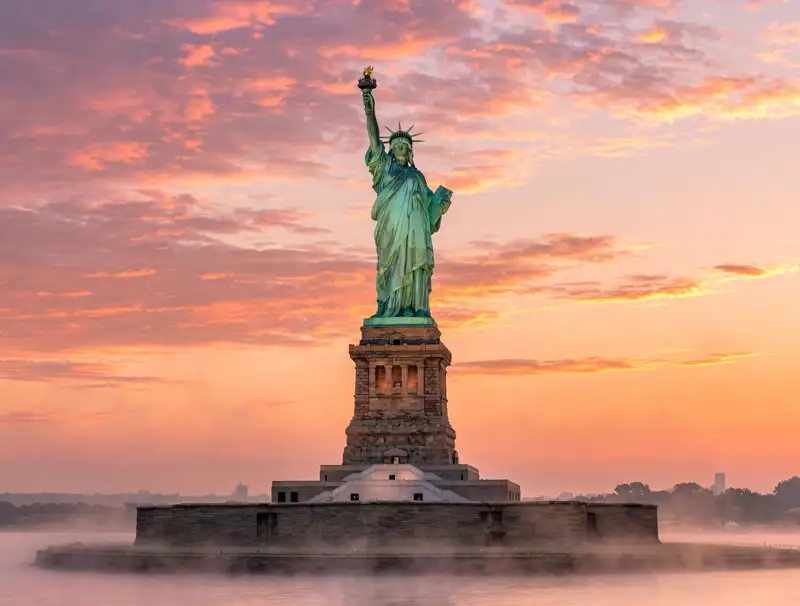
The blessings of liberty meaning is both simple and profound: it is the promise that freedom, once won, will be kept. Written into the Preamble of the Constitution in 1787, the phrase “secure the Blessings of Liberty to ourselves and our Posterity” committed the American nation to a purpose larger than any single generation — protecting the rights of free speech, faith, assembly and self-government, and passing them down intact.
More than two centuries later, that promise still shapes American life. Every vote cast, every protest held peacefully, every newspaper printed freely and every courtroom where a person is judged by law rather than power is a blessing of liberty being enjoyed and, at the same time, being secured for the next generation. The founders could not guarantee that liberty would survive — they could only build the framework and trust their posterity to maintain it. We are that posterity. Understanding what the phrase means is the first step; living up to it is the work of a lifetime.

DailyWishHub is your everyday source for wishes, greetings, and special occasion messages, managed by Lucas Bennett , an SEO content writer with 2 years of experience, crafting reader-friendly content that makes every celebration more memorable.
4 thoughts on “Blessings of Liberty Meaning Explained”