
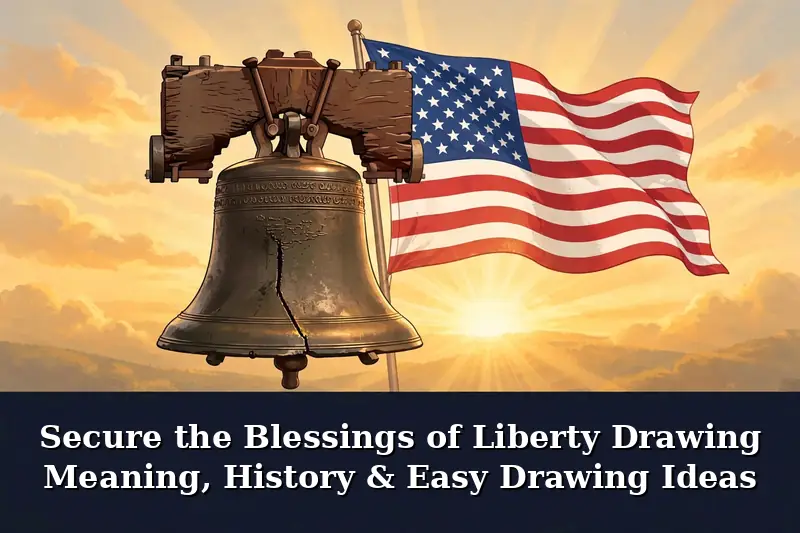
If you have searched for a secure the blessings of liberty drawing, you are probably holding a pencil for one of two reasons: a teacher has asked you to illustrate the famous phrase from the American Constitution, or you simply want to turn these powerful words into art. Either way, you have come to the right place. This guide explains what the phrase really means, tells the remarkable story behind it, and then walks you through ten easy drawing ideas — from the Liberty Bell to a hand-lettered banner — so your artwork actually says something.
Most pages about this phrase stop at a one-paragraph definition. Here you will get the full picture: the meaning in plain English, the history of the Preamble of the United States Constitution, a symbolism guide so every line you draw has purpose, classroom and home activities, and practical tips for a beautiful finished piece. The word “blessings” pops up in modern culture too — the Calvin Harris Blessings song gives it a very different, musical flavour — but in this phrase it carries the weight of a nation’s founding promise.
What “Secure the Blessings of Liberty” Really Means
Let us break the phrase down word by word, because each one was chosen with extraordinary care by the men who wrote it.
“Secure” does not mean “obtain” here — it means to protect, to make safe, to hold firmly. The Founding Fathers had just won liberty through a long and bloody war of independence; their fear was losing it again through weak government, tyranny, or simple neglect.
“The blessings of liberty” means all the good things that freedom brings into ordinary life: the freedom to speak your mind, to worship as you choose, to vote, to work, to raise your family in safety, and to be treated fairly under the law. A “blessing” is a gift or benefit — so the phrase describes freedom itself as a gift worth guarding. For a deeper look at the phrase on its own, see our companion guide to the blessings of liberty meaning.
“To ourselves and our posterity” is the part that gives teachers goosebumps. “Ourselves” means the generation alive in 1787. “Our posterity” means every generation after them — their children, grandchildren, and all the way down to you, sitting with your sketchbook today. The Constitution was written as a promise across time: we will keep liberty safe, not just for us, but for everyone who comes after.
So in one plain sentence: the phrase is a promise to protect freedom — and all the good things freedom makes possible — for the present generation and for every generation to come. That is why it makes such a wonderful drawing subject. It is not an abstract rule; it is a gift being handed from one generation to the next, and that idea can be drawn in a dozen beautiful ways.
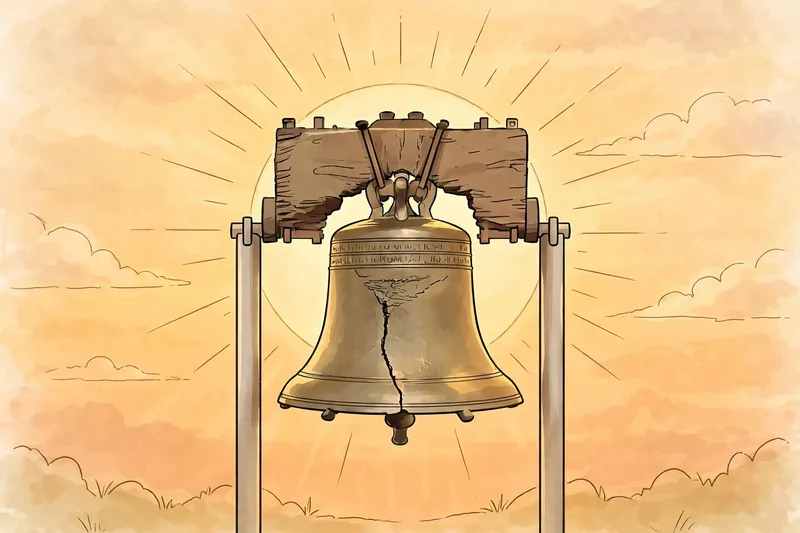
The cracked Liberty Bell, shown above, has become one of the most beloved visual symbols of this promise — its flaw is part of its story, a reminder that liberty is precious precisely because it is fragile.
The Story Behind the Phrase: The Preamble of the US Constitution
The words “secure the Blessings of Liberty” come from the Preamble — the opening paragraph — of the Constitution of the United States. The full Preamble reads:
“We the People of the United States, in Order to form a more perfect Union, establish Justice, insure domestic Tranquility, provide for the common defence, promote the general Welfare, and secure the Blessings of Liberty to ourselves and our Posterity, do ordain and establish this Constitution for the United States of America.”
It is a single sentence of just 52 words, yet it states the entire purpose of the American government. Every drawing you make of this phrase is really an illustration of that purpose.
The story begins in the summer of 1787 in Philadelphia. Fifty-five delegates from twelve states gathered for the Constitutional Convention, officially called to fix the weak Articles of Confederation — America’s first, failing attempt at a national government, which could not tax, could not regulate trade, and had nearly collapsed during Shays’s Rebellion. Instead of patching the old system, the delegates, led by figures such as James Madison — often called the Father of the Constitution — and George Washington, who presided over the convention, built something entirely new.
After months of fierce debate and compromise, 39 delegates signed the Constitution on 17 September 1787. The elegant handwritten copy was engrossed by Jacob Shallus, a clerk whose penmanship gave the document its famous flowing script. The Constitution was ratified in 1788 and the new government began in 1789. You can read the full Preamble in the National Archives’ transcription of the Constitution, and see the original parchment on display in the Rotunda of the National Archives Museum in Washington, D.C. For broader background, Britannica’s overview of the Constitution explains the convention, the compromises, and the Bill of Rights in detail.
Why does this history matter for your drawing? Because the best illustrations of the phrase carry its story with them. A bell is just a bell — until you know it rang for independence. A quill is just a feather — until you know it signed a promise to unborn generations. When you understand that “our posterity” includes you, the drawing stops being homework and becomes a personal answer to a 238-year-old letter.
Why This Phrase Is a Favourite Drawing Assignment
Teachers love this phrase for art projects because it sits at the perfect crossroads of history, language, and visual thinking. An activity used in American classrooms — sometimes called “Draw It: Preamble” — asks pupils to illustrate each clause of the Preamble in its own panel. “Secure the blessings of liberty” is consistently the panel children remember most, because it invites imagination rather than memorisation.
Drawing the phrase works so well as a learning tool for three reasons. First, abstract ideas become concrete: a child who draws a bell, a torch, or an open chain understands “liberty” far better than one who only copies the definition. Second, choices reveal understanding: when a pupil picks a sunrise to represent “posterity,” the teacher can see the concept has truly landed. Third, the artwork lasts: a poster on a classroom wall keeps teaching long after the lesson ends.
Parents get involved too. Around Constitution Day (17 September) and Independence Day, families search for drawing ideas they can do together at the kitchen table — a low-cost, screen-free activity that sneaks in a genuine history lesson. Whether you are a pupil, a teacher planning a lesson, or a parent looking for a meaningful weekend project, the ten ideas below are organised from simplest to most ambitious, so you can start exactly where you are comfortable.
10 Easy “Secure the Blessings of Liberty” Drawing Ideas
Each idea below includes simple steps. Start with light pencil sketching, then add colour with crayons, coloured pencils, or markers. None of them requires advanced skill — just patience and the symbolism guide further down.
1. The Liberty Bell
The most recognisable symbol of American liberty, and wonderfully forgiving to draw. Sketch a wide “U” shape for the bell’s body, add a small dome and yoke on top, then draw the famous crack as a jagged lightning line down the centre. Colour it warm bronze or gold, and set it against a sunrise — the rising sun quietly says “posterity,” a new day for a new generation.
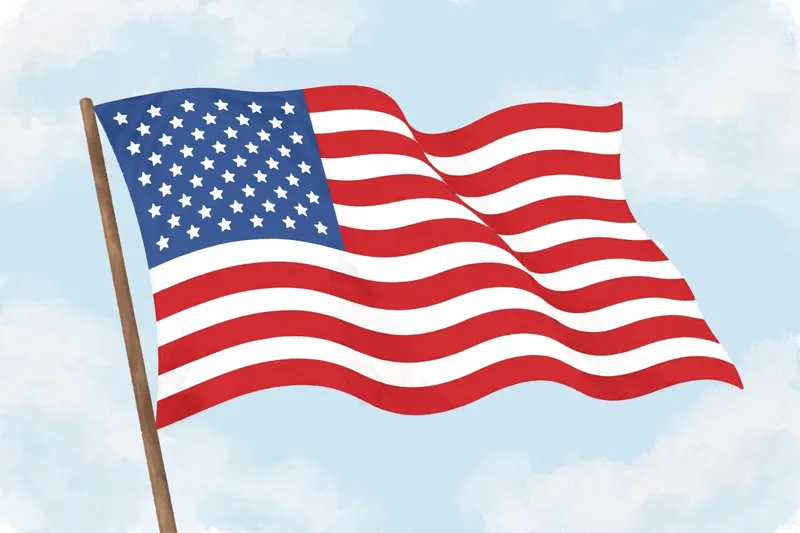
2. The Waving American Flag
A flag is mostly straight lines made lively. Draw a rectangle, divide it into 13 horizontal stripes, and give the whole shape a gentle wave by curving the top and bottom edges. Add a blue canton in the upper-left corner with a scattering of small stars — they do not need to be a perfect 50; even a neat grid of stars reads instantly as the flag. Red, white, and blue practically colour themselves.
3. The Torch of Liberty
The Statue of Liberty’s torch represents enlightenment — light showing the way. Draw a simple cup or bowl shape for the torch head, a tapering handle below it, and a hand gripping the handle. Above the cup, draw layered flame shapes in yellow, orange, and red, with a few radiating lines to suggest glow. Children love this one because flames are fun and the hand makes it feel personal, as if they are holding liberty up.
4. A Hand-Lettered Phrase Banner
Sometimes the words themselves are the artwork. Draw a flowing ribbon banner across the page and letter “Secure the Blessings of Liberty” inside it in your best handwriting — bubble letters for younger artists, elegant script for older ones. Decorate the ribbon’s tails with stars or stripes. Practise the lettering on scrap paper first; centred, evenly spaced letters transform this from a sentence into a keepsake.
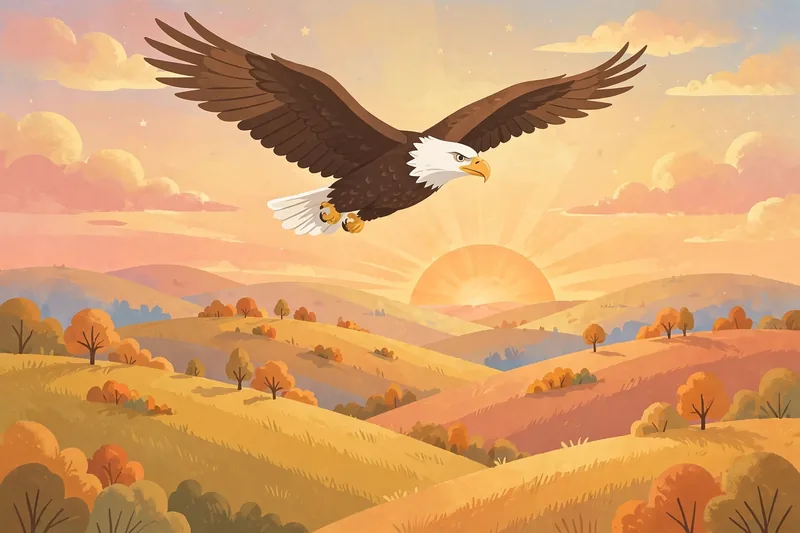
5. The Bald Eagle
America’s national bird stands for strength and vigilance. Start with a broad “M” shape for the outstretched wings, add a streamlined body, a white head with a hooked yellow beak, and a fanned tail. Position it soaring over hills or a sunrise. It is the most challenging idea on this list, so try it large — big shapes are easier to control than small fiddly ones.
6. The Parchment Scroll
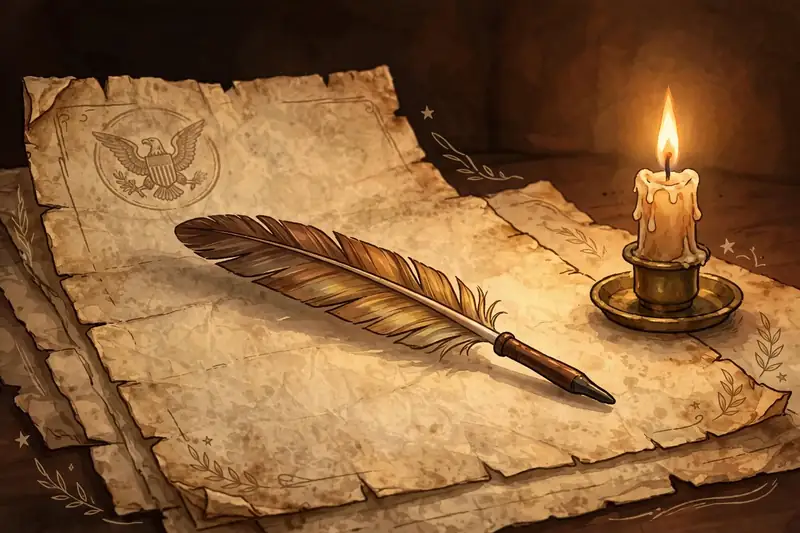
Draw a rolled scroll: a wide rectangle with curled ends, shaded in aged-paper tones of cream and tan. Across it, write “We the People” in large letters — the three most famous words of the Preamble. Add a quill pen resting beside it. This idea connects your drawing directly to the 1787 document and looks impressively historical with very little effort.
7. Broken Chains
Nothing says “liberty” faster than a snapped chain. Draw a row of oval chain links across the page, then break the middle link into two jagged halves with a small burst of motion lines. You can draw hands pulling the ends apart for extra drama. It is simple, bold, and instantly understood by every viewer — perfect for younger children.
8. Sunrise Over the Land
For “our posterity” — the future generations — draw a sunrise: a large semicircle sun low on the horizon, radiating beams, rolling hills in layered greens and golds below. This idea needs no historical knowledge at all, yet it captures the phrase’s forward-looking promise beautifully. It also makes a gorgeous background if you letter the phrase across the sky.
9. A Shield of Thirteen Stars
The original thirteen states are a cornerstone of the liberty story. Draw a classic shield shape, divide it into stripes, and arrange thirteen stars in a circle (the “Betsy Ross” arrangement) above or within it. A circle of stars has no beginning and no end — a quiet visual metaphor for a union that endures.
10. The Dove with Ribbon
End on a gentle note: a simple dove in flight carrying a ribbon in its beak, with the words “blessings of liberty” written along the ribbon. Draw the dove from two overlapping teardrop shapes for body and wing. This is the warmest, most universal of the ten ideas — liberty as a gift of peace, suitable for any age and any classroom wall.
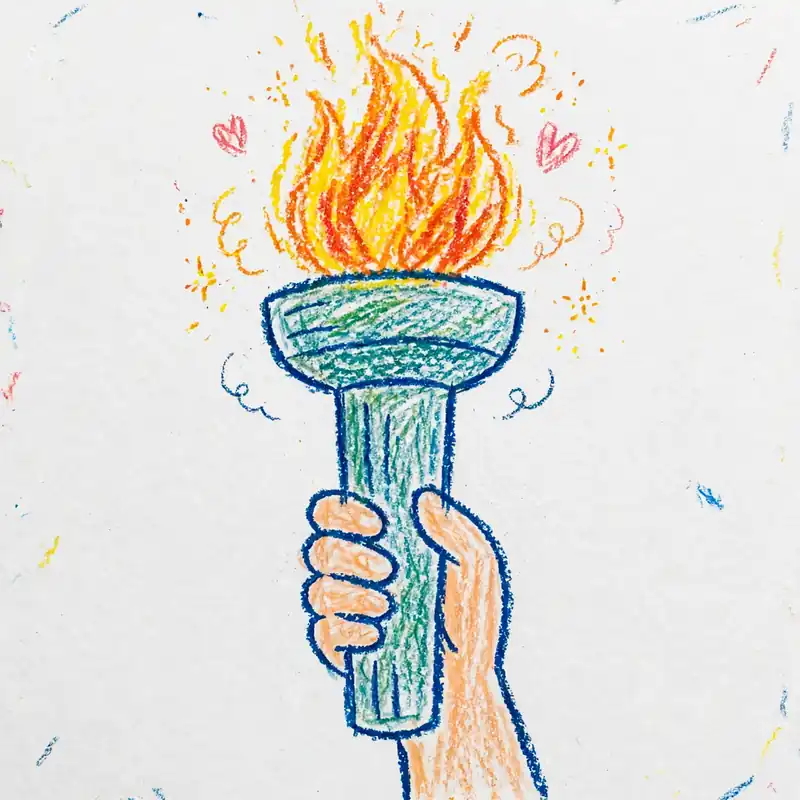
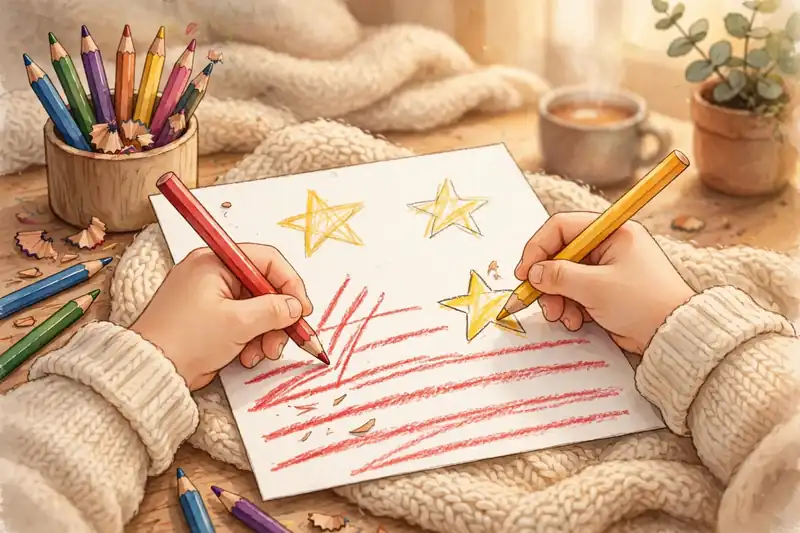
The crayon torch above shows how charming a child’s own version can be — bold outlines, bright flames, and total confidence beat technical perfection every time.
Symbolism Guide: What Each Element in Your Drawing Means
A great secure the blessings of liberty drawing is not just pretty — it is literate. Every symbol you include should mean something. Here is a quick reference so your artistic choices are deliberate:
- The Liberty Bell — freedom’s voice; its crack reminds us liberty is precious and must be protected, not taken for granted.
- The torch — enlightenment and guidance; liberty lights the way for the world, as the Statue of Liberty’s full name (“Liberty Enlightening the World”) declares.
- The bald eagle — strength, vigilance, and independence; chosen as the national bird in 1782.
- The American flag — the nation itself; thirteen stripes for the original thirteen colonies, fifty stars for today’s fifty states, red for courage, white for purity, blue for justice.
- Broken chains — release from tyranny and oppression; the most direct visual translation of “liberty.”
- The sunrise — “our posterity”; new beginnings and the future generations the promise is made to.
- The quill and parchment — the act of writing the Constitution; a reminder that liberty was secured with ideas and signatures, not only with battles.
- Thirteen stars in a circle — the original states united with no beginning and no end.
- The dove — peace; liberty as a blessing shared gently rather than seized.
Combine two or three symbols rather than crowding in all nine. A bell against a sunrise, for example, quietly tells the whole story: liberty (the bell), protected for the future (the sunrise). Restraint is what separates a thoughtful composition from a cluttered one.
Classroom and Home Activities
Turn the drawing into a fuller learning experience with these ready-to-use activities:
1. Draw-It Preamble panels. Fold a sheet of paper into six panels and illustrate each goal of the Preamble — a more perfect union, justice, tranquillity, defence, welfare, and the blessings of liberty. Display the six panels as a strip; pupils see at a glance how their phrase fits the bigger promise.
2. Symbol detective. Before drawing, give children the symbolism guide above as a checklist and ask them to spot each symbol in real life — on coins, stamps, and public buildings. Drawing becomes a treasure hunt first and an art lesson second.
3. Hand-lettering practice. Print the Preamble sentence large and let children trace the words “secure the Blessings of Liberty” in calligraphy pens. Tracing builds muscle memory for the letterforms they will use in idea 4.
4. Poster with a pledge. Older pupils can pair their drawing with a short written pledge: one sentence beginning “To secure the blessings of liberty, I will…” — vote, volunteer, learn, listen. Art plus civic intention is a combination teachers remember.
5. Gallery walk. Hang finished drawings around the room and let each artist explain their symbol choices in thirty seconds. Explaining art cements learning, and shy pupils often shine when talking about their own work.
For a softer follow-up activity with younger children, our animal blessings and prayers collection offers gentle, illustrated themes that pair beautifully with a history-heavy art lesson.
Tips for a Beautiful Blessings of Liberty Drawing
- Sketch lightly first. Keep your pencil pressure feather-light until the composition is right; heavy lines too early are hard to erase and muddy the colours layered over them.
- Limit your palette. Red, white, blue, plus gold or bronze covers nearly every idea on this list. A restrained palette looks more professional than every colour in the box.
- Use bold outlines. Go over final pencil lines with a dark marker or crayon. Strong outlines are the single biggest difference between a sketch and a finished piece.
- Leave breathing room. Do not fill every centimetre. White space around your bell, torch, or lettering makes the subject stand out and the page feel calm.
- Practise lettering separately. If your drawing includes words, draft them on scrap paper first. Even, centred lettering elevates the whole artwork; wobbly lettering drags it down.
- Add a sunrise or sky wash last. Light background washes in yellow or pale blue unify the composition. Apply them gently so they sit behind, not over, your main subject.
- Sign and date it. You are part of “our posterity” — sign your name and the date in a corner. Years from now, that signature will be the most precious part of the drawing.
Frequently Asked Questions
What does “secure the blessings of liberty” mean in simple words?
It is a promise to protect freedom — and all the good things freedom brings, like free speech and fair laws — for today’s generation and every generation after it.
Where does the phrase come from?
It comes from the Preamble of the United States Constitution, written in Philadelphia in 1787 and signed on 17 September of that year.
What is the easiest thing to draw for this phrase?
The Liberty Bell or a waving flag: both use simple shapes, read instantly as symbols of liberty, and are very forgiving for beginners.
What symbols best represent liberty in a drawing?
The Liberty Bell, the torch of liberty, the bald eagle, broken chains, and a sunrise — each carries a clear, widely understood meaning explained in our symbolism guide above.
Can I use these drawing ideas for a school project?
Absolutely. They were designed for classroom use — from Draw-It Preamble panels to Constitution Day posters — and every idea includes steps a pupil can follow independently.
Who wrote the phrase “secure the Blessings of Liberty”?
The Preamble is generally credited to Gouverneur Morris of Pennsylvania, who drafted the Constitution’s final text, building on the work of James Madison and the other delegates.
Final Thoughts
A secure the blessings of liberty drawing is more than an art exercise — it is a conversation across 238 years. When you draw the bell, the torch, or the flag, you are answering the promise the Founders made to “our posterity” with your own hands. That is worth doing slowly and thoughtfully.
Start with the idea that excites you most, keep your outlines bold and your palette simple, and let every symbol earn its place. When you are finished, hang it where you will see it — and remember that liberty, like a drawing, stays beautiful only when each generation takes up the pencil.

DailyWishHub is your everyday source for wishes, greetings, and special occasion messages, managed by Lucas Bennett, an SEO content writer with 2 years of experience, crafting reader-friendly content that makes every celebration more memorable.
1 thought on “Secure the Blessings of Liberty Drawing: Meaning, History & Easy Drawing Ideas”